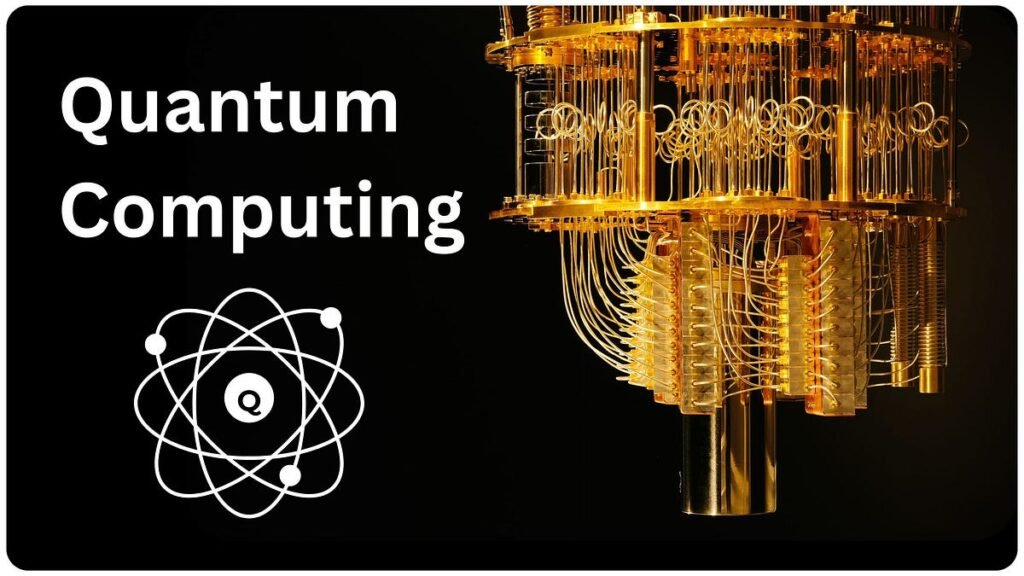
Computers have transformed the way people live and work, but a new technology called quantum computing could take computing power to an entirely different level. While today’s computers solve billions of calculations every second, quantum computers have the potential to solve some of the world’s most complex problems much faster.
In 2026, governments, universities, and technology companies are investing billions of dollars in quantum research. Although quantum computers are still in the early stages of development, experts believe they could revolutionize healthcare, cybersecurity, finance, artificial intelligence, and scientific research.
Understanding quantum computing helps us prepare for a future where today’s impossible calculations may become possible.
What Is Quantum Computing?
Quantum computing is a new type of computing that uses the principles of quantum physics instead of traditional computing.
Unlike normal computers, quantum computers process information in a completely different way, allowing them to solve certain problems much faster.
How Traditional Computers Work
Today’s computers use bits.
Each bit can only have one value:
- 0
- 1
Every application, website, game, and operating system is built using billions of these bits.
What Are Qubits?
Quantum computers use quantum bits, commonly called qubits.
Unlike ordinary bits, qubits can exist in multiple states at the same time.
This allows quantum computers to process enormous amounts of information simultaneously.
Why Quantum Computers Are Faster
Quantum computers can explore many possible solutions at once.
This makes them especially useful for solving problems involving:
- Massive calculations
- Complex simulations
- Advanced optimization
- Scientific research
For specific tasks, they may outperform traditional computers by a huge margin.
Industries That Could Benefit
Quantum computing has the potential to transform many industries.
Examples include:
- Healthcare
- Banking
- Artificial Intelligence
- Transportation
- Energy
- Manufacturing
Researchers continue discovering new applications.
Healthcare and Medicine
Scientists believe quantum computing could help:
- Discover new medicines
- Improve disease research
- Analyze DNA faster
- Create personalized treatments
Medical breakthroughs could happen much more quickly.
Artificial Intelligence
AI systems require enormous computing power.
Quantum computing may help AI:
- Learn faster
- Analyze larger datasets
- Improve predictions
- Solve complex problems
The combination of AI and quantum computing could reshape technology.
Cybersecurity
Quantum computing presents both opportunities and challenges.
It may:
- Strengthen encryption
- Improve digital security
- Detect cyber threats
At the same time, future quantum computers may require entirely new encryption methods.
Climate Research
Climate scientists use computer models to predict environmental changes.
Quantum computers may improve:
- Weather forecasting
- Climate simulations
- Energy efficiency
- Environmental research
Better models can support smarter decision-making.
Financial Services
Banks and investment firms may use quantum computing for:
- Risk analysis
- Portfolio optimization
- Fraud detection
- Market forecasting
Faster calculations could improve financial planning.
Space Exploration
Space agencies may benefit from quantum computing by improving:
- Spacecraft navigation
- Mission planning
- Satellite communications
- Scientific simulations
Complex calculations become more manageable.
Manufacturing
Factories may use quantum computing to:
- Improve production
- Reduce waste
- Optimize supply chains
- Design better materials
Industries could become more efficient.
Transportation
Quantum technology could improve:
- Traffic management
- Delivery routes
- Airline scheduling
- Public transportation systems
Smarter transportation benefits both businesses and travelers.
Current Challenges
Quantum computing still faces major obstacles.
These include:
High Costs
Building quantum computers is extremely expensive.
Technical Complexity
The technology requires highly specialized equipment.
Error Rates
Quantum calculations remain difficult to stabilize.
Limited Availability
Only a small number of organizations currently have access to advanced quantum systems.
Will Quantum Computers Replace Traditional Computers?
Probably not.
Traditional computers will continue handling everyday tasks such as:
- Browsing the internet
- Office work
- Gaming
- Video streaming
Quantum computers will likely be used for highly specialized scientific and industrial applications.
Who Is Investing in Quantum Computing?
Many organizations are investing heavily in quantum research.
These include:
- Technology companies
- Universities
- Research laboratories
- Governments
Competition is accelerating innovation worldwide.
The Future of Quantum Computing
Experts predict significant progress during the next decade.
Future developments may include:
- More reliable quantum hardware
- Faster scientific discoveries
- Improved cybersecurity
- Better AI systems
- New industrial applications
Although widespread adoption may take time, the future looks promising.
Why Quantum Computing Matters
Quantum computing represents one of the biggest technological breakthroughs of the 21st century.
It has the potential to:
- Solve previously impossible problems
- Accelerate scientific research
- Improve healthcare
- Transform industries
- Drive future innovation
Its long-term impact could be comparable to the invention of the internet.
Conclusion
Quantum computing is still developing, but its potential is enormous. By using the principles of quantum physics, these powerful machines could revolutionize medicine, artificial intelligence, finance, transportation, cybersecurity, and many other industries.
While traditional computers will remain essential for everyday use, quantum computers are expected to tackle the world’s most complex challenges. As research continues in 2026 and beyond, quantum computing may become one of the most important technologies shaping the future of humanity.
Frequently Asked Questions (FAQs)
1. What is quantum computing?
Quantum computing is a new type of computing that uses quantum physics to solve complex problems.
2. How is a quantum computer different from a normal computer?
Traditional computers use bits, while quantum computers use qubits that can process multiple possibilities simultaneously.
3. What industries could benefit from quantum computing?
Healthcare, finance, AI, transportation, manufacturing, cybersecurity, and scientific research.
4. Will quantum computers replace personal computers?
No. They are expected to complement traditional computers rather than replace them.
5. Why is quantum computing important?
It could solve complex problems much faster than today’s computers, leading to breakthroughs across many fields.