Introduction
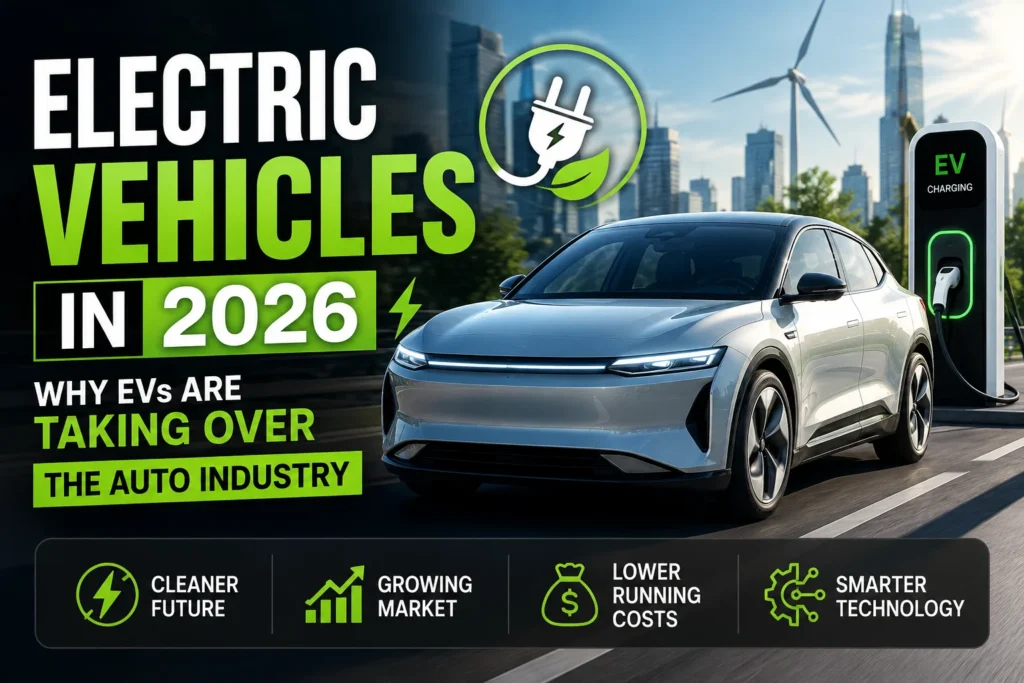
The automotive industry is experiencing one of the biggest transformations in its history. Electric vehicles, commonly known as EVs, are becoming more popular every year. What was once considered a niche technology is now entering the mainstream market. In 2026, millions of drivers around the world are choosing electric vehicles instead of traditional gasoline or diesel-powered cars.
Governments, manufacturers, and consumers are all contributing to this shift. Rising fuel prices, environmental concerns, and advances in battery technology have accelerated the adoption of EVs. Major car companies are investing billions of dollars into electric vehicle development because they see EVs as the future of transportation.
The question is no longer whether electric vehicles will become important. The real question is how quickly they will replace traditional cars.
What Is an Electric Vehicle
An electric vehicle is a car powered by electricity instead of a conventional internal combustion engine.
Unlike traditional vehicles, EVs use:
- Electric motors
- Rechargeable batteries
- Charging systems
- Advanced software controls
Because they do not burn fuel, electric vehicles produce zero tailpipe emissions.
This makes them an attractive option for environmentally conscious consumers.
Why EVs Are Becoming Popular
Several factors are driving the growth of electric vehicles.
Rising Fuel Costs
Gasoline and diesel prices have increased in many countries.
Electric vehicles often cost less to operate because electricity is generally cheaper than fuel.
Environmental Awareness
People are becoming more concerned about climate change and air pollution.
Electric vehicles help reduce carbon emissions and improve air quality.
Government Support
Many governments offer incentives such as:
- Tax credits
- Purchase subsidies
- Reduced registration fees
- Special parking benefits
These programs encourage consumers to switch to electric vehicles.
Advances in Battery Technology
Battery technology has improved significantly in recent years.
Modern batteries offer:
- Longer driving range
- Faster charging
- Better durability
- Lower production costs
Earlier concerns about limited range are becoming less significant as technology improves.
Many new EV models can travel hundreds of kilometers on a single charge.
Major Companies Leading the EV Market
Several manufacturers are competing for leadership in the electric vehicle industry.
Tesla
Tesla remains one of the most recognized EV brands globally.
The company continues to innovate in battery technology and autonomous driving systems.
Traditional Automakers
Many established manufacturers are investing heavily in electric vehicles.
These companies are launching new EV models across multiple price ranges.
Chinese Manufacturers
Chinese companies have become major players in the global EV market.
Their rapid growth is increasing competition and driving innovation.
Benefits of Electric Vehicles
Lower Operating Costs
Electric vehicles generally require less maintenance.
They have fewer moving parts compared to traditional engines.
Reduced Emissions
EVs help reduce air pollution and greenhouse gas emissions.
This contributes to cleaner cities and improved public health.
Quiet Driving Experience
Electric motors operate much more quietly than traditional engines.
Many drivers appreciate the smooth and silent ride.
Energy Efficiency
Electric vehicles convert energy more efficiently than gasoline-powered cars.
This improves overall performance and reduces energy waste.
Challenges Facing Electric Vehicles
Despite their growth, EVs still face several challenges.
Charging Infrastructure
Many regions still lack sufficient charging stations.
Expanding charging networks remains a priority.
Battery Costs
Although prices are falling, batteries remain one of the most expensive components of an EV.
Charging Time
Refueling a gasoline vehicle takes minutes.
Charging an electric vehicle can take significantly longer.
Raw Material Supply
Battery production depends on materials such as lithium, cobalt, and nickel.
Demand for these resources continues to increase.
Which Countries Benefit Most
Several countries are gaining significant economic advantages from the EV transition.
China
China is a major producer of batteries and electric vehicles.
The country has invested heavily in EV manufacturing.
United States
American companies continue to develop advanced EV technology and infrastructure.
European Countries
Many European nations are promoting EV adoption through strong environmental policies.
These investments support economic growth and technological leadership.
The Impact on the Oil Industry
The growth of electric vehicles is changing the global energy market.
As more people switch to EVs:
- Fuel demand may decrease
- Oil consumption could slow
- Energy markets may evolve
Traditional energy companies are closely monitoring these developments.
The transportation sector is one of the largest consumers of oil worldwide.
The Future of Electric Vehicles
Experts expect EV adoption to continue growing throughout the next decade.
Future developments may include:
- Faster charging technology
- Longer battery life
- Lower vehicle costs
- Improved autonomous driving systems
- Expanded charging networks
As technology advances, electric vehicles will become more accessible to consumers.
Conclusion
Electric vehicles are transforming the automotive industry in 2026. Driven by technological innovation, environmental concerns, and government support, EVs are becoming an increasingly attractive option for drivers around the world.
While challenges remain, the momentum behind electric vehicles continues to grow. Improvements in battery technology, infrastructure, and affordability are making EVs more practical than ever before.
The future of transportation is changing rapidly, and electric vehicles are playing a central role in shaping that future.
FAQs
1. What is an electric vehicle?
An electric vehicle is a car powered primarily by electricity stored in rechargeable batteries.
2. Why are EVs becoming popular?
Rising fuel prices, environmental concerns, and improved technology are major factors.
3. Are electric vehicles cheaper to operate?
Yes. Electricity and maintenance costs are generally lower than traditional fuel-powered vehicles.
4. What is the biggest challenge for EVs?
Charging infrastructure and battery costs remain important challenges.