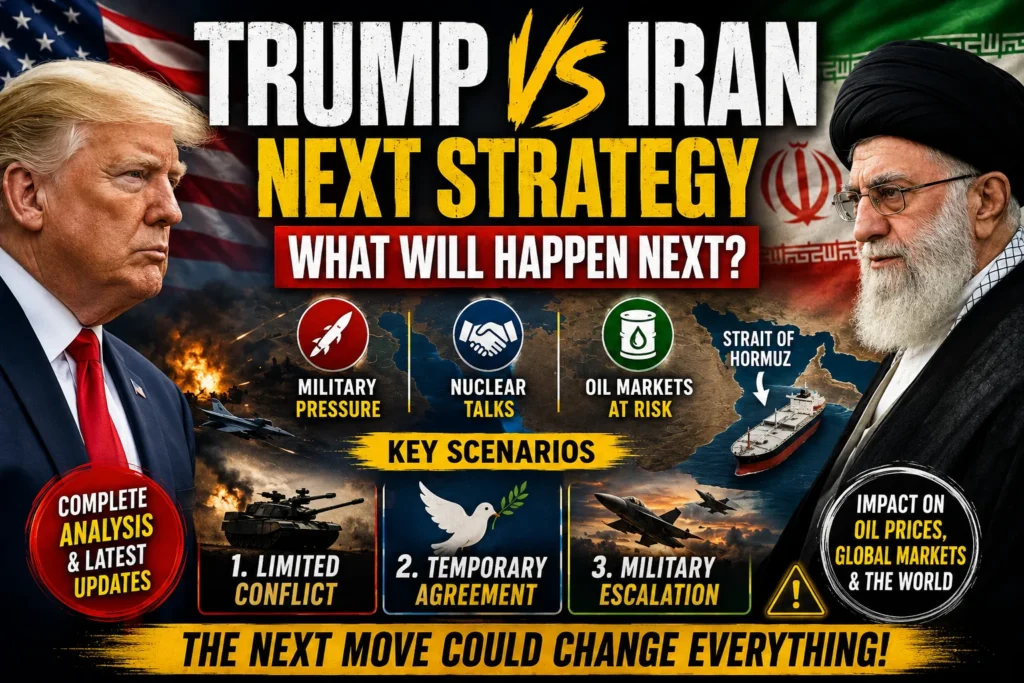
The conflict between the United States and Iran has become one of the biggest global issues of 2026. Political pressure, military threats, oil disruptions, and failed negotiations have pushed the situation into a dangerous phase. Around the world, people are asking the same question.
What is Trump planning next, and how will Iran respond?
The answer is not simple because both sides are following a strategy that combines pressure, negotiation, and military positioning at the same time. Recent reports show that neither side wants to appear weak, but neither side seems eager to enter a full-scale war either.
Trump’s Current Strategy
Donald Trump appears to be using a pressure-first approach. His administration has increased military readiness, maintained economic pressure, and continued demanding stronger restrictions on Iran’s nuclear activities. At the same time, negotiations are still taking place behind the scenes.
Trump’s strategy seems focused on three major goals:
- Limiting Iran’s nuclear capabilities
- Reopening and securing global oil routes
- Forcing Iran into a broader political agreement
According to multiple reports, Trump wants a deal that can be presented as a major victory while also avoiding a prolonged military conflict that could damage the American economy.
Iran’s Strategy Right Now
Iran is taking a different approach. Instead of accepting American demands immediately, Tehran is trying to increase its leverage before making major concessions.
Iran’s main objectives include:
- Reduction of economic sanctions
- Protection of its nuclear program
- Maintaining regional influence
- Avoiding internal political weakness
Iranian officials continue to signal that they are willing to negotiate, but only if they receive meaningful guarantees in return. Recent statements suggest that Tehran does not fully trust Washington and wants actions instead of promises.
The Strait of Hormuz Remains the Biggest Pressure Point
One of the most important parts of this conflict is the Strait of Hormuz.
This narrow waterway handles a large percentage of the world’s oil shipments. Any disruption there immediately affects global markets.
Both sides understand its importance.
- The United States wants unrestricted shipping access
- Iran sees the region as a strategic bargaining tool
- Global energy markets react to every new development
Because oil prices directly impact economies worldwide, pressure is increasing on both governments to avoid major escalation.
Why Full War Is Still Unlikely
Many headlines focus on war, but most analysts believe a complete war is still not the most likely outcome.
There are several reasons:
- Economic costs would be massive
- Oil markets could collapse into chaos
- Other countries could become involved
- Military risks are extremely high
Even though military threats continue, both governments understand that a large conflict could create consequences that are difficult to control.
Possible Future Scenarios
1. Limited Conflict Continues
This is currently the most realistic scenario.
Tensions remain high, occasional incidents continue, negotiations move slowly, and neither side fully backs down.
Many experts believe this situation could continue for months.
2. A Temporary Agreement Is Reached
Recent reports suggest discussions are ongoing regarding ceasefires, oil routes, and nuclear issues. A limited agreement could reduce tensions without fully solving the deeper problems.
3. Military Escalation Returns
If talks fail completely or a major incident occurs, military operations could increase again.
This remains a serious risk because both sides continue to maintain strong military positions in the region.
How This Impacts the World
This conflict affects far more than just the United States and Iran.
Oil Prices
Any escalation pushes oil prices higher.
Gold Markets
Investors often buy gold during geopolitical uncertainty.
Global Trade
Shipping disruptions create economic pressure worldwide.
Financial Markets
Stock markets become more volatile whenever tensions increase.
Many traders are closely monitoring every statement coming from Washington and Tehran because market reactions can happen within minutes.
What Could Happen in the Coming Weeks
The next few weeks may be critical.
Trump appears to be seeking a deal that demonstrates strength while avoiding economic damage before political pressure increases at home. Iran appears focused on gaining concessions without appearing to surrender its core interests.
This creates a difficult situation where both governments want an outcome they can present as a victory.
That is why negotiations remain fragile.
One successful agreement could calm global markets.
One major mistake could create a new phase of confrontation.
Conclusion
The United States and Iran are currently balancing between diplomacy and pressure. Trump’s strategy focuses on forcing stronger concessions while maintaining military and economic leverage. Iran’s strategy is centered on resisting pressure while seeking sanctions relief and political guarantees.
At the moment, limited conflict and continued negotiations appear more likely than a full-scale war. However, the situation remains unpredictable because trust between both sides remains extremely low.
The future will depend on whether leaders choose compromise or escalation. The coming weeks could shape not only Middle East stability but also global oil markets, trade routes, and international security.
FAQs
Is the US currently at war with Iran?
No full-scale war has been officially declared, but tensions and military actions have continued in various forms.
What does Trump want from Iran?
Trump is seeking stronger limits on Iran’s nuclear activities and broader security agreements.
Why is the Strait of Hormuz important?
A large portion of global oil shipments passes through it, making it crucial for world energy markets.
Could a peace agreement happen soon?
Negotiations are ongoing, but major disagreements still remain.
Will oil prices continue rising?
If tensions increase, oil prices could remain elevated because markets react quickly to geopolitical risks.