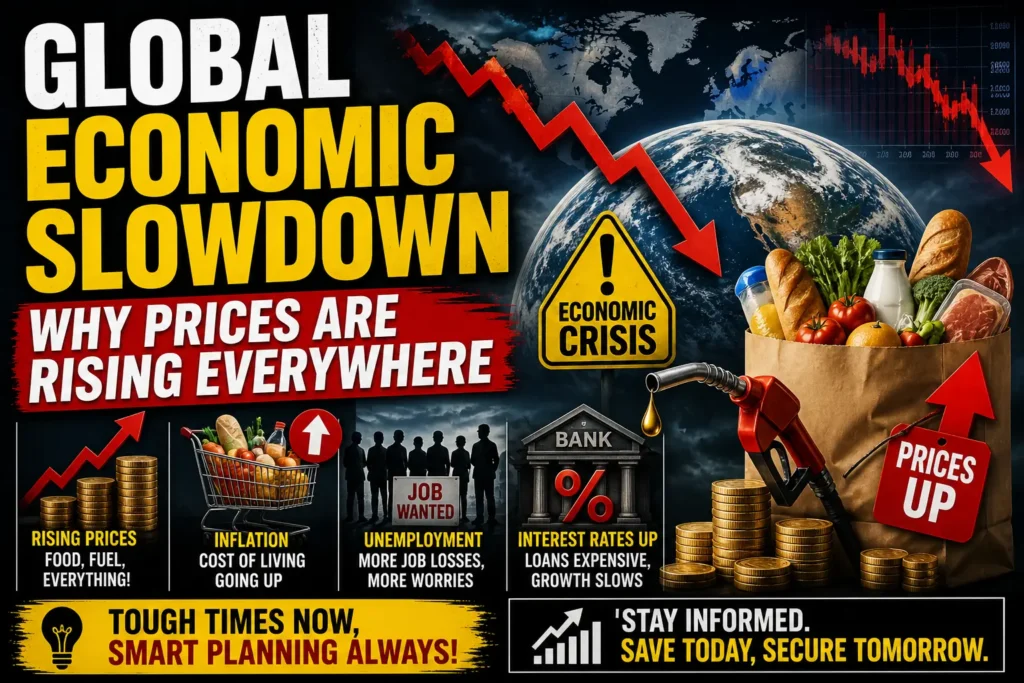
Across the globe, people are noticing the same problem. Prices are rising, and money does not stretch as far as it used to. Whether you live in a developed country or a developing one, the pressure feels real. From groceries to fuel, from rent to electricity, everything is becoming more expensive. This is not happening by accident. It is part of a broader global economic slowdown that is affecting nearly every country.
The situation may seem complicated, but at its core, it is driven by a few key factors working together. Inflation, supply chain disruptions, global conflicts, and policy decisions are all connected. When one area is affected, it creates a ripple effect across the entire world economy.
Organizations like the International Monetary Fund and World Bank have warned that global growth is slowing down, and recovery will take time. You can explore their latest updates here:
What Is Causing Prices To Rise
One of the biggest reasons behind rising prices is inflation. Inflation simply means that the cost of goods and services is increasing over time. When inflation rises quickly, people feel the impact immediately in their daily lives.
There are several causes behind inflation. One major factor is when governments increase the money supply. When more money is in circulation, its value can decrease, leading to higher prices. Another important reason is supply shortages. If products are limited but demand is high, prices naturally go up.
Global conflicts also play a major role. When countries are involved in disputes or wars, trade routes can be disrupted. This affects the availability of goods, especially essentials like oil, food, and raw materials. For example, energy price fluctuations have been widely covered by Reuters, showing how quickly markets react to global tension. You can follow such updates here:
All these factors combine to create a situation where prices rise faster than incomes, making life more difficult for ordinary people.
Impact on Jobs and Employment
Another major issue linked to the economic slowdown is unemployment. As costs rise, businesses try to protect themselves by reducing expenses. One of the easiest ways to cut costs is by reducing staff or slowing down hiring.
This creates a cycle. When people lose jobs, they spend less money. When spending decreases, businesses earn less. This forces companies to cut even more costs, leading to further job losses.
Industries like technology, manufacturing, and retail have already shown signs of this trend. Companies are becoming more cautious. They are delaying expansion plans and focusing on survival rather than growth.
For families, this creates stress and uncertainty. Job security becomes a major concern, and people start prioritizing basic needs over everything else. This change in behavior affects the overall economy even more.
Role of Central Banks and Interest Rates
Central banks play a key role in managing the economy. Institutions like the Federal Reserve and European Central Bank are responsible for controlling inflation and maintaining financial stability.
To reduce inflation, central banks increase interest rates. This makes borrowing more expensive. Loans for homes, businesses, and personal use become costly. As a result, people spend less, and demand in the market decreases.
While this helps control inflation, it also slows down economic activity. Businesses find it harder to invest, and consumers reduce spending. This creates a delicate balance. If rates are too high, growth slows too much. If rates are too low, inflation continues to rise.
That is why managing interest rates is one of the most challenging tasks for central banks today.
How Global Trade and Supply Chains Are Affected
Global trade is another area heavily impacted by the slowdown. Modern economies depend on complex supply chains that connect countries across the world. When one part of the chain is disrupted, the entire system feels the effect.
Events like pandemics, political tensions, and shipping delays have shown how fragile these systems can be. When goods cannot move freely, shortages occur. This leads to higher prices and delayed production.
For example, delays in shipping raw materials can slow down manufacturing. This reduces the supply of finished goods, increasing their price in the market.
Countries are now trying to reduce dependence on global supply chains by focusing on local production. While this may improve stability, it can also increase costs in the short term.
How It Affects Everyday Life
The global economic slowdown is not just a headline. It affects daily life in real ways.
- Food prices increase, making groceries more expensive
- Fuel costs rise, increasing transportation expenses
- Rent and housing become less affordable
- Utility bills continue to grow
People are forced to make difficult choices. Many cut back on non-essential spending. Others look for additional sources of income. Saving money becomes more important than ever.
This shift in behavior is happening worldwide. It shows how deeply the economic slowdown is impacting individuals and families.
What Can Happen Next
Experts believe that the global economy will eventually recover, but it will not happen overnight. The process may be slow and uneven across different regions.
Some countries may recover faster due to strong policies and stable systems. Others may take longer because of ongoing challenges.
There are a few possible outcomes.
- Gradual recovery with controlled inflation
- Continued slow growth with economic pressure
- Unexpected shocks that delay recovery further
The direction depends on global cooperation, policy decisions, and stability in key regions.
Conclusion
The global economy is going through a difficult phase. Rising prices and job uncertainty are affecting millions of people. While governments and financial institutions are working to control the situation, recovery will take time.
For individuals, the best approach is to stay informed and make smart financial decisions. Reducing unnecessary spending, saving money, and planning for the future are essential steps.
Economic challenges are not new, and history shows that recovery is always possible. Patience, awareness, and careful planning are the keys to getting through this period.
FAQs
Why are prices rising everywhere?
Because of inflation, supply chain issues, and global conflicts affecting production and trade.
Is the economy going to recover soon?
Recovery is expected, but it may take time depending on global conditions.
How can people protect themselves financially?
By saving money, reducing expenses, and avoiding unnecessary debt.
Why are jobs being affected?
Companies are cutting costs due to lower profits and economic pressure.
What is inflation in simple words?
It means the price of goods and services is increasing over time.