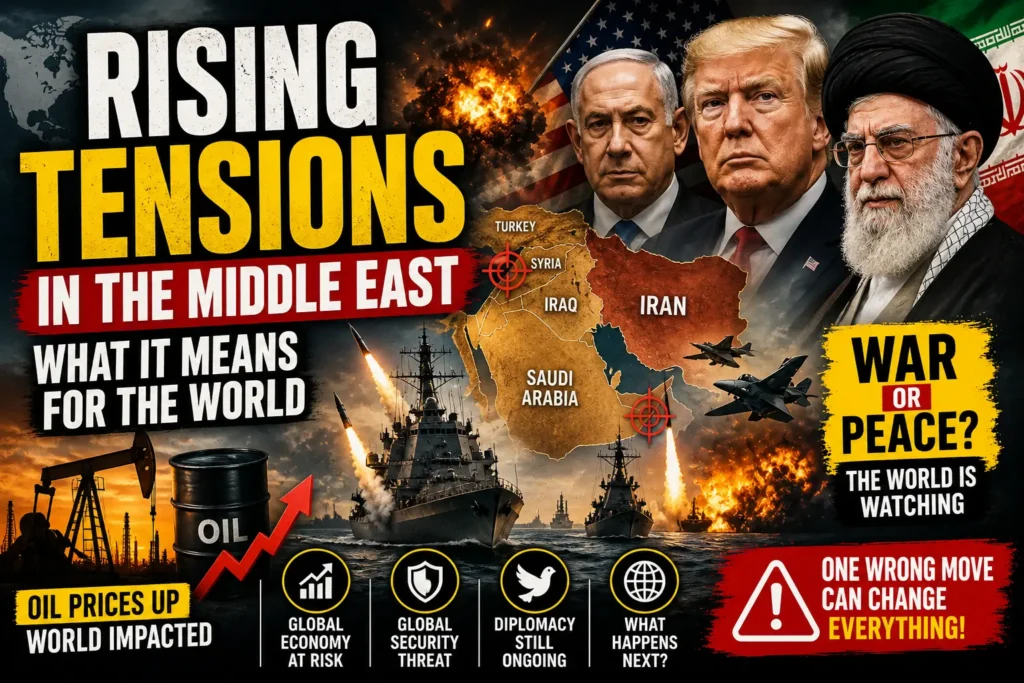
The Middle East is once again at the center of global attention, and this time the stakes feel higher than ever. Conflicts, political pressure, and military movements are increasing, especially involving the United States, Iran, and several neighboring countries. While some people may think this is just another regional issue, the reality is very different. What happens in this part of the world directly affects economies, security, and daily life across the globe.
This region has always been important because of its location, resources, and political influence. But today, the situation is more complex. There are multiple players involved, hidden alliances, and ongoing disagreements that make it difficult to predict what will happen next. That uncertainty is what makes the current situation so serious. One wrong move, one unexpected action, and things can escalate very quickly.
For the average person, this might feel far away. But the truth is, the impact of these tensions travels fast. From fuel prices to global trade, the ripple effects can be felt everywhere. Understanding what is happening is no longer optional. It is necessary.
Oil Prices and Global Economy Impact
One of the biggest reasons the Middle East matters so much is oil. This region controls a large portion of the world’s oil supply, and any instability immediately affects global markets. When tensions rise, oil prices usually increase. This might sound like a small issue, but it has a direct impact on everyday life.
When oil prices go up, transportation becomes more expensive. That means higher costs for shipping goods, which leads to increased prices for food, clothing, and other essentials. Even people living thousands of miles away from the Middle East feel this impact in their daily expenses.
For example, disruptions in key routes like the Strait of Hormuz can create serious problems. This narrow waterway is one of the most important oil transit routes in the world. If it is blocked or threatened, global supply chains are affected immediately.
According to reports from Reuters, even small conflicts in the region can push oil prices higher within hours. You can read more about how global oil markets react to tensions here:
So when we talk about Middle East tensions, we are not just talking about politics. We are talking about the cost of living for millions of people worldwide.
Global Security and Military Risks
Another major concern is global security. The Middle East is not isolated. It is connected to major global powers, and any conflict can quickly spread beyond the region. Countries like Russia and China are closely watching the situation. If tensions escalate, these countries could become involved in different ways.
This creates a dangerous scenario. What starts as a regional conflict can turn into a much larger global issue. Military alliances, defense agreements, and strategic interests all play a role here. It is not just about two countries disagreeing. It is about a network of global relationships that can pull multiple nations into conflict.
Modern warfare is also different from the past. It is not just about soldiers and weapons. Cyber attacks, economic sanctions, and proxy conflicts are now part of the equation. This makes the situation even more unpredictable.
Experts often warn that even a small incident can trigger a chain reaction. That is why governments around the world are taking this situation seriously. No one wants a full-scale war, but the risk cannot be ignored.
Diplomacy vs Conflict: A Delicate Balance
Right now, most countries are trying to avoid a full-scale war. Diplomatic efforts are ongoing, and leaders are working behind the scenes to reduce tensions. However, there is a major problem. Trust between nations is very low.
When trust is weak, even simple negotiations become difficult. Each side doubts the intentions of the other. This leads to delays, disagreements, and sometimes complete failure of peace talks.
The challenge here is balance. Countries want to protect their interests, but they also want to avoid war. This creates a situation where every decision must be carefully calculated. One aggressive move can increase tension. One wrong statement can damage negotiations.
At the same time, internal politics also play a role. Leaders must consider public opinion, national pride, and political pressure. This makes diplomacy even more complicated.
Despite these challenges, dialogue is still the best option. History has shown that wars often start when communication breaks down. Keeping conversations alive, even when progress is slow, is extremely important.
Conclusion
The situation in the Middle East is serious and cannot be ignored. It is not just about one region. It affects the entire world, especially through oil prices and global security. While leaders are still trying to avoid a full war, the risk remains high.
The coming weeks and months will be very important. If countries choose dialogue and cooperation, peace is possible. If they choose aggression and confrontation, the consequences could be severe for everyone.
For individuals, the best approach is to stay informed and understand the bigger picture. Global events are more connected than ever before. What happens in one part of the world can affect lives everywhere
FAQs
Why is the Middle East important globally?
Because it controls a large portion of the world’s oil supply and affects global trade.
Can this conflict turn into a world war?
It is possible if more countries get involved.
How does it affect common people?
It increases fuel prices, food costs, and economic pressure.
Are peace talks happening?
Yes, but progress is slow due to lack of trust.
What should people do in this situation?
Stay informed, avoid panic, and manage expenses carefully.