War in 2026 is not limited to bombs, borders, and armies. Its impact goes far beyond the battlefield. While headlines often focus on military actions, the real damage spreads silently across economies, households, and daily life. Even countries that are not directly involved in conflict are feeling the pressure.
From rising fuel prices to increasing food costs, the effects of war are global. It is not just soldiers who suffer. Ordinary people, businesses, and entire economies face the consequences. Understanding this impact is important because it shows how deeply connected the world has become.
Fuel Prices and Petrol Crisis
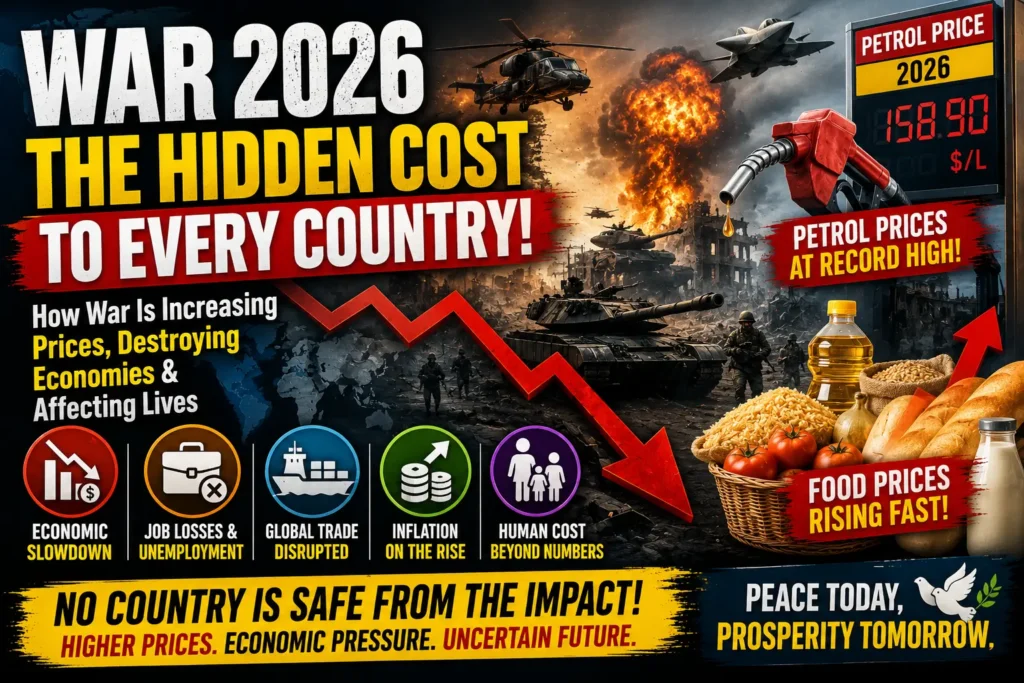
One of the biggest effects of war in 2026 is the sharp rise in petrol prices. When conflict happens in regions that control oil supply, the global market reacts immediately. Supply becomes uncertain, and prices start increasing.
Petrol is not just used for cars. It affects transportation, shipping, and production. When fuel becomes expensive, everything else follows. The cost of moving goods rises, which increases the price of everyday items.
For many countries, especially developing ones, this creates serious problems. People spend more money on fuel and less on other needs. Businesses struggle with higher costs, and inflation rises.
Food Prices and Daily Living Costs
War also affects food supply. Many countries depend on imports for grains, oil, and other essentials. When conflict disrupts trade routes, supply decreases and prices increase.
Farmers may also be affected directly if conflict happens near agricultural regions. Crops are damaged, production slows down, and shortages begin. This leads to higher food prices globally.
For ordinary people, this means daily life becomes more expensive. Basic items like bread, vegetables, and cooking oil cost more than before. Families have to adjust their spending, and financial pressure increases.
Economic Slowdown and Job Loss
Another major impact of war is economic slowdown. When countries spend more on defense and security, they often reduce spending in other areas like development and public services.
Businesses become cautious. Investment decreases, and companies may reduce hiring or even lay off workers. This creates job insecurity and increases unemployment.
Tourism is also affected. People avoid traveling to unstable regions, which hurts local economies. Airlines, hotels, and related industries face losses.
The overall result is slower economic growth. Even strong economies feel the pressure when global instability increases.
Impact on Global Trade
Global trade depends on stability. When war disrupts important routes, shipping becomes difficult and expensive. Delays increase, and businesses struggle to maintain supply chains.
Important trade routes, especially those connected to oil and gas, become risky. Insurance costs for shipping rise, and companies may avoid certain areas completely.
This affects industries worldwide. From electronics to clothing, many products depend on global supply chains. When those chains are disturbed, production slows down and prices rise.
Currency and Inflation Pressure
War creates uncertainty, and markets do not like uncertainty. Investors become cautious, and currencies can lose value. This leads to inflation, where the cost of goods and services increases.
In some countries, the local currency weakens against the dollar. This makes imports more expensive, adding further pressure on the economy.
Central banks try to control inflation by adjusting interest rates, but this can also slow down growth. It becomes a difficult situation to manage.
Human Impact Beyond Numbers
While economic damage is serious, the human impact is even more important. Families are affected by rising costs, job losses, and uncertainty about the future.
In conflict zones, people face displacement, loss of homes, and lack of basic resources. Even in peaceful countries, stress and anxiety increase due to global instability.
War changes lives in ways that cannot always be measured with numbers. It creates long-term challenges that take years to recover from.
Conclusion
The war in 2026 shows that no country is truly isolated. Even if a nation is not directly involved, it still feels the effects through rising prices, economic pressure, and global instability.
Petrol prices, food costs, job markets, and trade systems are all connected. When one part of the world faces conflict, the impact spreads everywhere.
The biggest lesson is clear. War is not just about politics or power. It affects real people, real lives, and the global future. Peace and stability are not just ideals. They are necessities for economic and social well-being.
FAQs
Why do petrol prices increase during war?
Because oil supply becomes uncertain, which raises global prices.
How does war affect food prices?
It disrupts supply chains and reduces production, leading to higher costs.
Can war impact countries not involved in conflict?
Yes, through global trade, economy, and market changes.
Why do businesses suffer during war?
Because of uncertainty, higher costs, and reduced investment.
What is the biggest impact of war on people?
Rising living costs, job insecurity, and overall financial pressure.