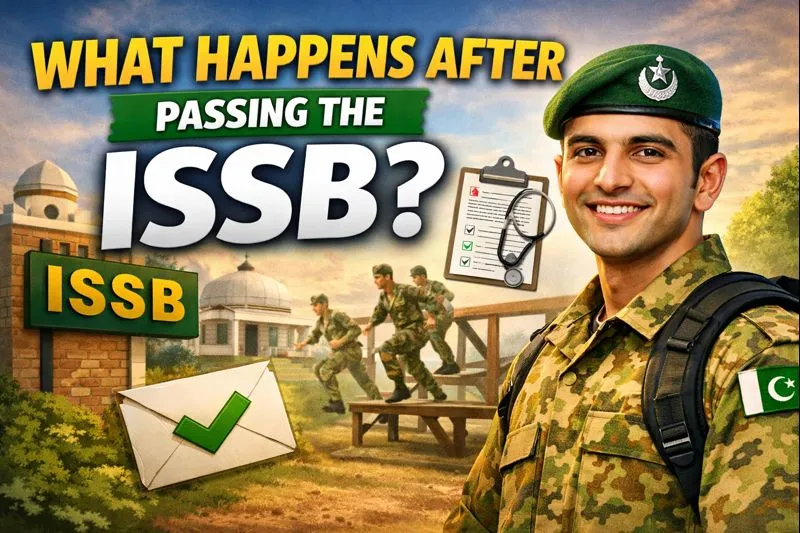
Passing the ISSB feels like crossing the biggest hurdle — but for many candidates, confusion actually starts after the result. Questions about medicals, call letters, merit, and training timelines often create unnecessary stress and overthinking.
Many candidates believe that passing ISSB guarantees joining the Pakistan Army. In reality, ISSB recommendation means you are eligible for final selection, not confirmed induction. Final merit depends on several factors, including medical fitness, available vacancies, and overall merit position.
The waiting period after ISSB can feel longer than the selection itself. Some candidates receive updates within weeks, while others wait for months. This delay does not automatically mean rejection — it is usually part of batch planning and vacancy management.
This article explains what usually happens after passing the ISSB in a realistic, clear, and easy-to-understand way, especially for candidates who are unsure about what to expect next.
What Does “ISSB Recommended” Actually Mean?
Passing the ISSB does not automatically mean final selection. This is one of the biggest misunderstandings among candidates. Being ISSB recommended simply means that you have cleared the psychological, physical, and leadership assessments and are considered suitable for commission.
Final selection depends on factors such as overall merit, medical fitness, availability of vacancies, and branch requirements. Some candidates are recommended but do not get called immediately, which often creates confusion and unnecessary panic.
It is important to understand that ISSB recommendation places you in a pool of eligible candidates. From there, final selections are made based on merit and organizational needs.
What Happens Immediately After the ISSB Result?
After the ISSB result is announced, most candidates return home and enter a waiting phase. There is usually no immediate communication unless further documentation or clarification is required.
During this time, your ISSB report is forwarded for final review. This process happens behind the scenes, so candidates often feel disconnected or uncertain. Lack of updates during this stage is normal and should not be taken as a negative sign.
Some candidates may also be asked to submit additional documents or corrections if any issue is found in their records.
The Waiting Period – What Most Candidates Don’t Expect
The waiting period after passing ISSB is often longer than expected. Some candidates hear back within a few weeks, while others may wait several months. This variation depends on merit position, intake schedules, and batch planning.
Many candidates assume that silence means rejection, which is not true in most cases. Delays usually occur due to limited seats or adjustments in training batches. This phase often tests patience more than preparation.
Understanding that waiting is a normal part of the process helps reduce anxiety and prevents candidates from making incorrect assumptions.
Medical Review and Re-Checks Explained
Medical fitness plays a critical role after ISSB recommendation. Even if a candidate clears the initial medical examination, further reviews or re-checks can still take place.
Sometimes minor issues such as eyesight, blood pressure, or previous medical history are reassessed. These checks are conducted to ensure long-term fitness for military training and service.
Candidates should maintain good health during this period and take any medical communication seriously if contacted.
Call Letter Confusion – Why Some Get It Early and Others Don’t
One of the most frequently asked questions after ISSB is about call letters. There is no fixed timeline for receiving a call letter after recommendation.
Call letters are issued based on merit ranking and available vacancies. Candidates with higher merit may receive calls earlier, while others may be placed on a waiting list for upcoming batches.
Not receiving a call letter immediately does not mean rejection. Many candidates are inducted later without any prior update.
Training Academy Allocation – How It Is Decided
After final selection, candidates are assigned to training academies based on their branch, merit position, and availability of seats. Not everyone joins the same academy, even if they passed ISSB in the same batch.
Academy allocation is managed centrally, and personal preference usually does not play a role. This sometimes surprises candidates who expect a specific academy or location.
Once assigned, candidates receive reporting dates, preparation instructions, and basic joining guidelines.
Realistic Timeline – How Long the Whole Process Takes
One of the biggest sources of stress after ISSB is unrealistic expectations. Many candidates assume that training will start within a few weeks, which is rarely the case.
From ISSB recommendation to actual joining, the process can take several months. In some cases, it may extend close to a year depending on intake schedules and merit adjustments.
Understanding this timeline early helps candidates stay mentally prepared and avoid unnecessary disappointment.
Common Misunderstandings After Passing ISSB
Several misconceptions create confusion during the post-ISSB phase. One common belief is that passing ISSB guarantees joining, which is not always true.
Another misunderstanding is that no communication means rejection. In reality, silence often means the process is still ongoing. Some candidates also believe that training starts immediately after recommendation, which is rarely the case.
Clearing these misunderstandings early helps candidates remain patient and realistic.
What Candidates Should Do During the Waiting Period
The waiting period after ISSB is best used productively. Maintaining physical fitness is important, as training can be demanding once it begins.
Candidates should also keep their documents organized and stay alert for any official communication. Mentally, it is better to avoid rumors and constant speculation, as this often increases stress.
This period should be treated as preparation rather than uncertainty.
Frequently Asked Questions (FAQs)
Does passing ISSB guarantee joining the Pakistan Army?
No. Passing ISSB means recommendation only. Final selection depends on merit, medical fitness, and vacancies.
How long does it take to receive a call letter after ISSB?
There is no fixed timeline. Some candidates receive it within weeks, while others may wait several months.
Can a recommended candidate still be rejected?
Yes. Medical issues, low merit position, or lack of vacancies can affect final selection.
Is no update after ISSB a bad sign?
Not necessarily. Silence usually means the process is still ongoing.
Do all selected candidates join the same training academy?
No. Academy allocation depends on branch, merit, and seat availability.
Conclusion
Passing the ISSB is a major achievement, but it is not the final step in the selection process. Understanding what happens after ISSB helps candidates manage expectations and stay calm during the waiting phase.
Patience, discipline, and realistic thinking are essential during this period. Avoid comparing your timeline with others, as every case is different. Final selection follows a structured process that may take time.
Staying informed, healthy, and mentally prepared increases the chances of smoothly transitioning into training when the call finally arrives.