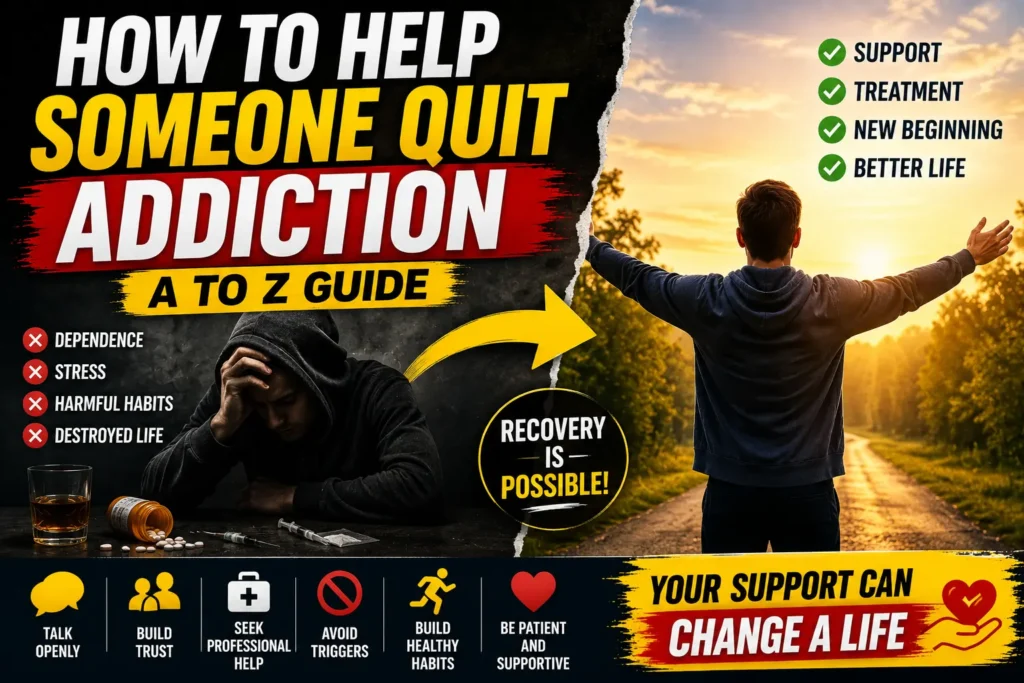
Addiction is one of the most difficult challenges a person can face. Whether it is drugs, alcohol, or any harmful substance, once someone becomes addicted, it is not easy to stop. Many people think it is just a matter of willpower, but the reality is very different. Addiction affects the brain, behavior, and emotions.
People who use substances regularly slowly become dependent on them. Their body and mind start craving it, and without it, they feel uncomfortable or even sick. This is why quitting becomes so hard. But the important thing to understand is this. Recovery is possible.
Helping someone quit addiction requires patience, support, and the right approach.
Why People Become Addicted
Before helping someone quit, it is important to understand why addiction happens.
There are several reasons.
- Stress and mental pressure
- Depression or emotional pain
- Bad company or peer pressure
- Curiosity that turns into habit
- Escape from real-life problems
At first, people use substances for relief or enjoyment. But slowly, it becomes a habit, and then a need. Over time, the person loses control.
Signs Someone Is Addicted
Recognizing addiction early can help in recovery.
Some common signs include.
- Strong cravings for the substance
- Mood swings and irritability
- Loss of interest in normal activities
- Financial problems due to spending on substances
- Hiding behavior or lying
If these signs are present, it is important to take action as soon as possible.
Step by Step Guide to Help Someone Quit
Helping someone quit addiction is not about forcing them. It is about guiding them.
1. Talk Honestly and Calmly
Start with a simple and honest conversation. Do not judge or blame. Speak with care and concern. Make them feel safe, not attacked.
2. Build Trust
If the person trusts you, they will be more open to change. Support them instead of criticizing them.
3. Encourage Professional Help
Addiction often requires medical and psychological support. Therapists, counselors, and rehab centers can provide proper treatment.
4. Remove Triggers
Help them avoid places, people, or situations that push them toward substance use. Environment plays a big role.
5. Support Healthy Habits
Encourage activities like exercise, hobbies, and social interaction. Keeping the mind busy helps reduce cravings.
6. Be Patient
Recovery takes time. There may be setbacks, but that does not mean failure. Stay supportive throughout the journey.
Role of Family and Friends
Family support is one of the most powerful tools in recovery. When people feel supported, they are more likely to stay strong.
Avoid harsh behavior. Instead of blaming, try understanding. Encourage progress, even small improvements.
Positive support can make a huge difference in someone’s life.
Common Mistakes to Avoid
Many people try to help but make mistakes that push the person further into addiction.
- Forcing them aggressively
- Shaming or insulting them
- Ignoring the problem
- Expecting quick results
These actions can make things worse. A calm and supportive approach works better.
How Long Does Recovery Take
Recovery time is different for everyone. Some people improve in weeks, while others take months or even years.
The important thing is consistency. Small steps lead to big results over time.
Is Relapse Normal
Yes, relapse can happen. It means the person has returned to substance use after trying to quit.
This should not be seen as failure. It is part of the recovery process for many people. What matters is getting back on track.
Conclusion
Addiction is a serious issue, but it is not the end of the road. With the right support, guidance, and patience, anyone can recover.
Helping someone quit addiction is not easy, but it is one of the most meaningful things you can do. Stay supportive, stay patient, and never give up on them.
Change is possible. Recovery is real.
FAQs
Can addiction be cured completely?
Yes, with proper treatment and support, recovery is possible.
Should I force someone to quit addiction?
No, forcing can make things worse. Support and guidance work better.
Is rehab necessary for everyone?
Not always, but in serious cases, it is very helpful.
How can I support someone emotionally?
By listening, understanding, and encouraging them.
What if the person refuses help?
Stay patient, keep supporting, and try again when they are ready.