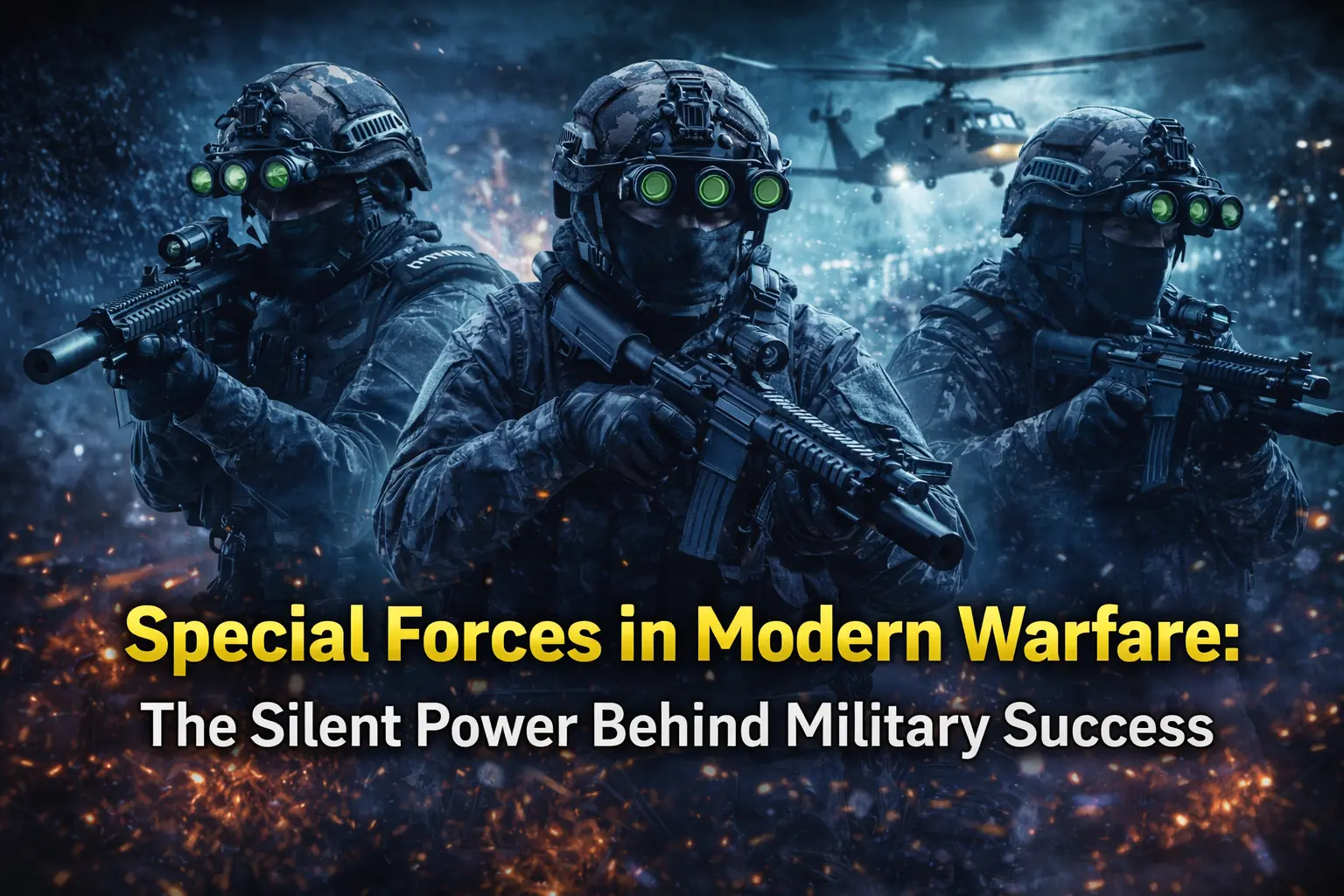
In every major military operation, there is a visible force and an invisible one. The visible force consists of tanks, aircraft, and large troop formations. But behind the scenes, operating in silence and precision, are the Special Forces.
In 2026, Special Forces have become one of the most critical elements of modern warfare. They operate in environments where conventional armies cannot, execute missions that require extreme precision, and often change the outcome of conflicts without being seen.
This is not just about elite soldiers. This is about strategy, intelligence, and psychological dominance.
What Are Special Forces?
Special Forces are highly trained military units designed for specialized missions.
Core Characteristics
- Small, highly skilled teams
- Advanced training beyond standard military levels
- Ability to operate independently
- Expertise in multiple combat environments
They are not designed for large-scale battles. They are designed for high-impact operations.
Key Roles of Special Forces in Modern Warfare
1. Counterterrorism Operations
- Targeting high-value threats
- Conducting hostage rescue missions
- Neutralizing terrorist networks
These missions require speed, precision, and intelligence.
2. Reconnaissance and Intelligence Gathering
- Operating deep behind enemy lines
- Providing real-time intelligence
- Identifying strategic targets
Information gathered by Special Forces often shapes entire military strategies.
3. Direct Action Missions
- Surgical strikes on critical targets
- Sabotage operations
- Capture or elimination of key individuals
These missions are short, fast, and highly coordinated.
4. Unconventional Warfare
- Training and supporting local forces
- Conducting guerrilla operations
- Operating in politically sensitive environments
This allows countries to influence conflicts without direct large-scale involvement.
Training of Special Forces: Beyond Limits
Special Forces training is among the toughest in the world.
Key Elements
- Extreme physical endurance
- Survival training in harsh environments
- Advanced weapons handling
- Psychological conditioning
Selection rates are extremely low. Only a small percentage of candidates qualify.
Mental Strength: The Real Difference
What truly sets Special Forces apart is mental resilience.
- Ability to operate under extreme stress
- Decision-making in isolation
- Emotional control during critical missions
In many cases, mental strength matters more than physical ability.
Technology and Special Forces
Modern Special Forces are equipped with advanced tools.
Key Technologies
- Night vision and thermal imaging systems
- Silent communication devices
- Advanced surveillance drones
- Precision-guided weapons
Technology enhances their effectiveness but does not replace skill.
Why Special Forces Are More Important Than Ever
Modern conflicts are complex and politically sensitive.
Reasons for Increased Importance
- Avoidance of large-scale wars
- Need for precise, low-visibility operations
- Rising threat of non-state actors
- Importance of intelligence-driven warfare
Special Forces provide a solution that is effective and controlled.
Global Examples of Special Forces
Almost every major country has elite units.
United States
- Highly advanced and globally deployed units
United Kingdom
- Known for discipline and precision operations
Russia
- Focus on toughness and operational depth
Regional Forces
Countries like Pakistan, Turkey, and India also maintain highly capable Special Forces units tailored to their operational needs.
Challenges Faced by Special Forces
Even elite units face difficulties.
1. High Operational Risk
Missions are dangerous and often behind enemy lines.
2. Mental Pressure
Continuous high-risk operations can impact mental health.
3. Limited Margin for Error
One mistake can compromise the entire mission.
What Makes Special Forces Effective
Key Qualities
- Precision over power
- Intelligence over numbers
- Speed over size
- Adaptability in any situation
They operate where others cannot.
Future of Special Forces
The role of Special Forces will continue to expand.
1. Integration with AI and Drones
Enhanced decision-making and surveillance.
2. Cyber and Intelligence Roles
Increased involvement in digital operations.
3. Multi-Domain Operations
Operating across land, air, cyber, and space environments.
Key Takeaways
- Special Forces are critical in modern warfare
- They focus on precision, intelligence, and speed
- Training and mental strength define their effectiveness
- Their role is expanding in future conflicts
FAQs
1. What is the main role of Special Forces?
To conduct specialized, high-risk missions that require precision and expertise.
2. Are Special Forces better than regular army units?
They are not better, but they are trained for different types of missions.
3. Why are Special Forces used instead of large armies?
Because they can achieve objectives with less visibility and lower risk of escalation.
4. How difficult is Special Forces training?
It is extremely challenging, with very high dropout rates.
Conclusion
Special Forces represent the silent edge of modern military power. They do not rely on numbers or visibility. They rely on skill, intelligence, and precision.
In a world where conflicts are becoming more complex and unpredictable, their role is only growing stronger.
The future of warfare may not always be decided by large armies or massive battles.
Sometimes, it will be decided by a small team operating in silence, far from the spotlight, shaping outcomes that the world may never fully see.
And that is the true power of Special Forces.