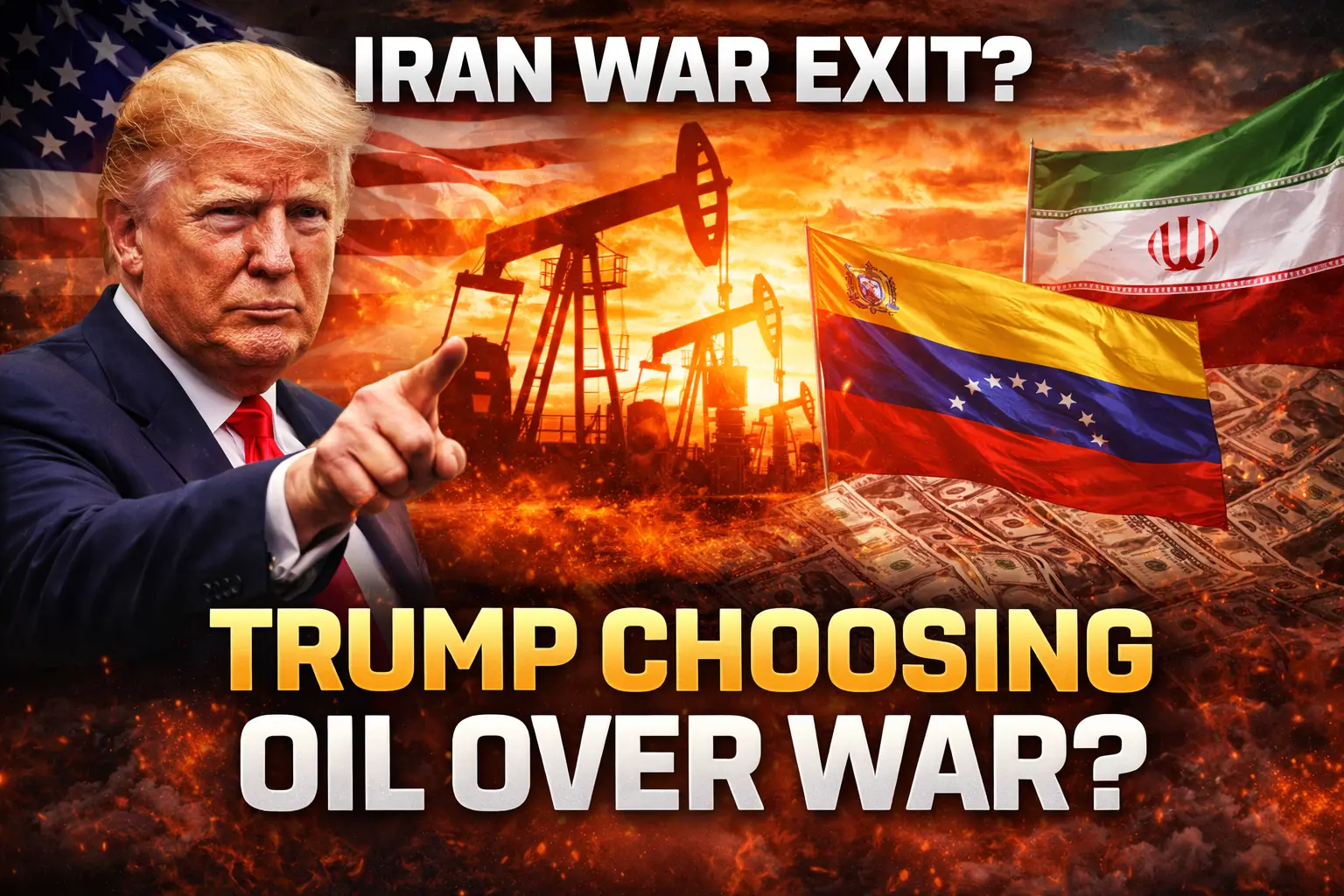
The global stage in 2026 is heating up not just because of war, but because of something even more powerful: oil politics. While many people think wars are fought for security or power, the reality often runs deeper. Behind the scenes, decisions are heavily influenced by energy control, economic pressure, and long-term geopolitical strategy. Recent developments suggest that the United States, under Donald Trump, may be considering stepping back from the Iran conflict. But is this really about peace or is there a bigger plan unfolding?
Let’s break it down in a simple, human way.
The Iran War Pressure: Why the U.S. Is Rethinking
The war involving the United States and Iran has created serious global tension. One of the biggest issues is the Strait of Hormuz, a critical route where nearly 20% of the world’s oil passes daily. Recent intelligence shows Iran still holds strong control over this region, creating pressure on global markets and U.S. leadership.
At the same time, oil prices have skyrocketed. Reports show crude oil crossing $100 per barrel, and fuel prices rising sharply, affecting everyday people.
This puts the U.S. in a tough position:
- Continue war → higher costs, global instability
- Step back → risk losing influence
So, what’s the smarter move?
The Venezuela Factor: The Real Game Changer
Here’s where things get interesting.
The U.S. recently made a surprising move by easing sanctions on Venezuela—a country sitting on the largest oil reserves in the world. This decision allows American companies to buy and control Venezuelan oil again.
Why would the U.S. suddenly do this?
Because:
- Iran war disrupted global oil supply
- Prices increased rapidly
- The U.S. needed an alternative oil source
This move shows a clear strategy:
👉 Replace Middle Eastern oil dependency with controlled supply from Venezuela
It’s like switching from a risky supplier to one you can manage more directly.
Is Trump Prioritizing Oil Over War?
Let’s be real for a moment: modern politics often follows money and resources. And oil is still king.
Donald Trump has openly suggested that controlling oil routes or supplies could be extremely profitable. In fact, he even mentioned the possibility of “making a fortune” through oil-related strategies.
This raises an important question:
👉 Is the war becoming less important than controlling oil markets?
From a strategic perspective, ending or reducing war involvement while securing oil from Venezuela could:
- Lower domestic fuel prices
- Reduce military expenses
- Increase economic control
It’s not just about winning a war anymore it’s about winning the global energy game.
Behind the Scenes: The “Silent Exit” Strategy
Experts believe the U.S. might not announce a sudden withdrawal. Instead, it could follow a slow and controlled exit strategy:
- Reduce direct military operations
- Shift responsibility to allies
- Maintain pressure through sanctions and diplomacy
- Focus on economic control instead of battlefield dominance
This kind of move allows the U.S. to avoid looking weak while still changing direction.
Think of it like quietly stepping out of a fight while still controlling the outcome from a distance.
Global Reaction: Not Everyone Is Happy
This shift is not without consequences.
- European allies are worried about rising energy costs
- Countries like China are benefiting from Iranian oil trade
- Global markets remain unstable due to supply disruptions
Even within the U.S., people are feeling the impact through higher fuel prices and inflation.
So while the strategy might be smart on paper, its real-world effects are complicated.
So, Is the U.S. Really Withdrawing?
Right now, there is no official full withdrawal confirmed. However, signs strongly suggest:
- The U.S. is looking for an exit path
- Oil strategy is becoming a top priority
- Venezuela is playing a key role in future planning
It’s less about “quitting” and more about changing the game plan.
Final Thoughts: War vs Oil – What Matters More?
At the end of the day, this situation shows a powerful truth:
👉 Modern wars are not just fought with weapons they are fought with resources, economics, and strategy.
The U.S. may not be “losing” or “winning” in the traditional sense. Instead, it is repositioning itself to gain long-term advantages.
And if oil becomes the deciding factor, then the real battlefield is not Iran it’s the global energy market.
FAQs
1. Is the U.S. officially withdrawing from the Iran war?
No official confirmation yet, but signs suggest a strategic shift rather than full withdrawal.
2. Why is Venezuela important in this situation?
Because it has massive oil reserves, helping the U.S. reduce dependence on Middle Eastern oil.
3. Is oil the main reason behind the war strategy?
Oil is a major factor, along with political and security concerns.
4. How does this affect global oil prices?
Disruptions in supply routes like the Strait of Hormuz have already increased prices globally.
5. Who benefits the most from this situation?
Countries controlling oil supply or trade routes gain the most advantage.