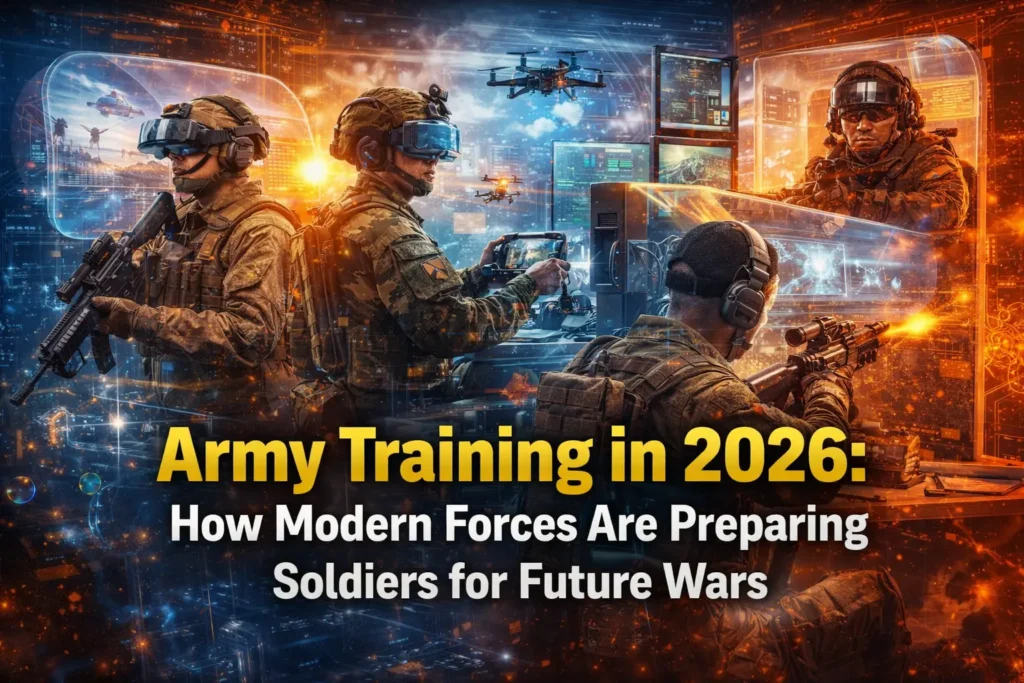
Behind every powerful military force is one critical element that often goes unnoticed. Training.
Weapons, technology, and strategy all matter, but without well-trained soldiers, none of it works. In 2026, army training has evolved far beyond physical drills and shooting practice. It has become a complex system designed to prepare soldiers for unpredictable, high-intensity, multi-domain warfare.
The battlefield has changed, and so has the soldier.
This article explores how modern armies are training their forces, what has changed, and what this means for future conflicts.
The Shift in Army Training Philosophy
Traditional training focused on discipline, endurance, and basic combat skills. Today, that is just the foundation.
Modern Training Focus
- Adaptability in rapidly changing environments
- Decision-making under pressure
- Integration with advanced technology
- Multi-domain awareness
Armies are no longer training soldiers just to follow orders. They are training them to think, react, and lead in chaotic situations.
Physical Training: Still the Backbone
Despite all technological advancements, physical fitness remains essential.
Core Elements
- Endurance and stamina building
- Strength training for combat conditions
- Obstacle courses simulating battlefield challenges
- Combat drills under stress
A soldier still needs to carry equipment, survive harsh environments, and operate under extreme pressure.
Physical strength is not optional. It is the base layer of combat readiness.
Mental Conditioning: The New Battlefield Requirement
Modern warfare places intense psychological pressure on soldiers.
Key Areas of Focus
- Stress management in combat zones
- Decision-making in life-or-death situations
- Emotional control under uncertainty
- Resilience against prolonged operations
Armies now invest heavily in mental toughness because wars today are longer and more complex.
Technology-Based Training: Preparing for Digital Warfare
Modern soldiers are being trained to operate advanced systems.
1. Simulation Training
- Virtual reality combat scenarios
- Realistic battlefield simulations
- Training without physical risk
This allows soldiers to experience war-like conditions before entering actual combat.
2. Drone and Surveillance Training
- Operating reconnaissance drones
- Understanding aerial intelligence
- Coordinating drone strikes
Drones are now part of standard military operations.
3. Cyber Awareness
Even infantry soldiers are being introduced to basic cyber concepts.
- Secure communication protocols
- Awareness of electronic warfare threats
- Protection against digital disruption
The battlefield is no longer just physical.
Specialized Training for Modern Combat
Urban Warfare Training
Most future conflicts are expected to occur in cities.
- Building-to-building combat
- Civilian environment awareness
- Close-quarter battle techniques
Hybrid Warfare Training
Soldiers are trained to deal with both conventional and unconventional threats.
- Fighting irregular forces
- Handling misinformation scenarios
- Operating in uncertain environments
Joint Operations Training
Modern armies rarely operate alone.
- Coordination with air and naval forces
- Joint exercises with allied countries
- Interoperability between different units
This ensures smooth cooperation during real operations.
Real Ground Reality: What Soldiers Experience Today
Training intensity has increased significantly.
- Longer training cycles
- More realistic and aggressive drills
- Continuous evaluation and performance pressure
- Exposure to advanced equipment early in training
The difference between training and real combat is becoming smaller.
Challenges in Modern Army Training
Despite improvements, there are challenges.
1. High Cost
Advanced training systems and simulations require significant investment.
2. Rapid Technological Change
Training programs must constantly evolve to keep up with new threats.
3. Mental Burnout
Increased pressure and intensity can affect soldier morale if not managed properly.
What Makes a Modern Soldier Different
Today’s soldier is not just a fighter.
Key Traits
- Technically skilled
- Mentally resilient
- Physically strong
- Adaptable to multiple roles
A modern soldier must be ready to switch from combat to coordination to decision-making within seconds.
Future of Army Training: What Comes Next
Looking ahead, training will continue to evolve.
1. AI-Based Training Systems
Personalized training programs based on individual performance.
2. Increased Use of Robotics
Training alongside autonomous systems.
3. Data-Driven Performance Analysis
Tracking and improving every aspect of soldier performance.
Key Takeaways
- Army training has become more complex and technology-driven
- Mental conditioning is as important as physical strength
- Simulation and digital training are reshaping preparation methods
- Future soldiers will need multi-domain skills
FAQs
1. Why is army training becoming more advanced?
Because modern warfare is more complex, requiring skills beyond traditional combat.
2. Are physical skills still important?
Yes, physical fitness remains the foundation of all military training.
3. What role does technology play in training?
Technology allows realistic simulations and prepares soldiers for modern battlefield systems.
4. Can training fully prepare soldiers for war?
Training reduces uncertainty, but real combat always presents unpredictable challenges.
Conclusion
Army training in 2026 is no longer just preparation. It is transformation.
The modern soldier is being shaped into a complete combat system, capable of operating across physical, digital, and psychological domains. The focus is no longer just on fighting the enemy, but on understanding the battlefield in its entirety.
The next wars will not be won by numbers alone.
They will be won by training, adaptability, and the ability to operate under pressure in a world where everything changes in seconds.
And that is exactly what modern forces are preparing for.